
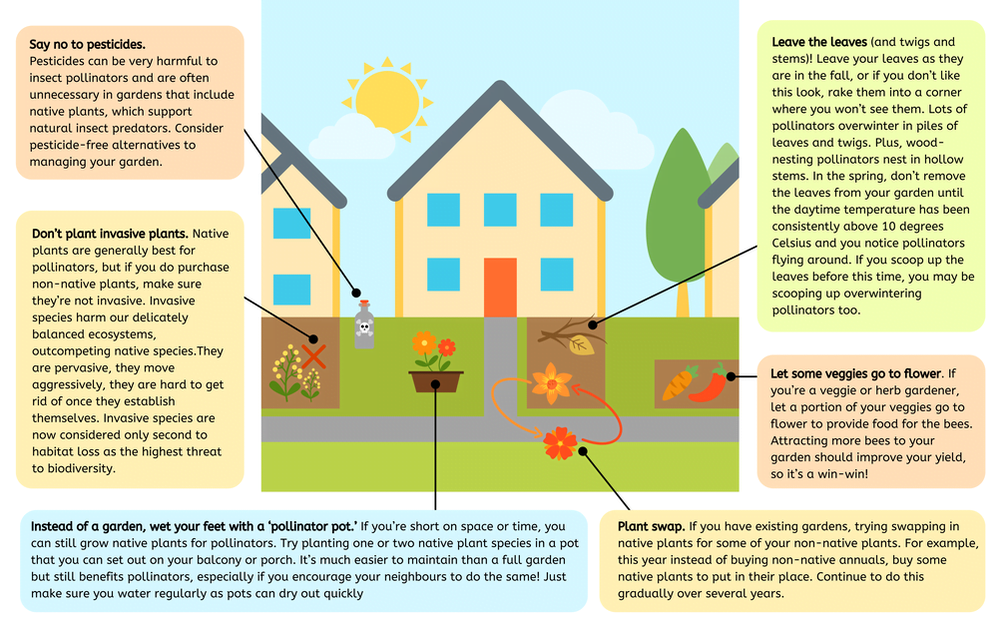
General Recommendations
Pollinators can thrive in small spaces, and habitats that are three square metres or larger are optimum for pollinators. But perhaps you have a very small yard or just a balcony. Or you're not ready to plant a garden yet. You can still support pollinators!
- Don't use pesticides
- Don't plant invasive plants
- Leave leaves, twigs and stems on your garden or lawn
- Let some veggies go to flower
- Swap some existing plants for native plants
- Plant a pollinator pot
Pollinator Pots
Perennials or small-sized woody plants are best in pots. Perennials bloom at different times of the year, so consider planting several different species with different bloom times, or plants that have interesting foliage. Make sure you use a big enough pot, so check your plant space requirement. Consider draught-tolerant plants because pots dry out much more quickly than beds. Make sure to water as appropriate.
Place pots in locations that are optimum for your plants - if you're planting meadow plants, then your pots want more sun. Woodland plants want more shade. Add compost and leaves to keep your soil rejuvenated naturally.
Bloom examples:
Spring: lanceleaf coreopsis - flowers May-August with yellow flowers - likes sun or partial sun, moist to dry soil - up to 1 m high.
Summer: bee balm - flowers July-September with scarlet flowers - likes sun or partial sun, moist or wet soil - 1 to 2 m high
Fall: fringed blue aster - flowers July-October with blue or purple flowers - likes sun and dry, well drained soil - up to 1 m high. Try planting with cherry tomatoes for a purple-red combination!